 ANIMAL PROSTHETICS
When a brace can help
If the dog uses the limb when walking but struggles to place the paw or needs support at a joint, a well-chosen brace can help with each step. We choose its design based on how the dog uses the leg.
When can a brace or a wheelchair help?
When a dog stumbles, drags its paws along the ground or its hind legs grow weak, the first step is to find the cause. Based on the veterinary findings and how well the dog can stand, step and bear weight, we assess whether a custom brace or wheelchair could help it move.
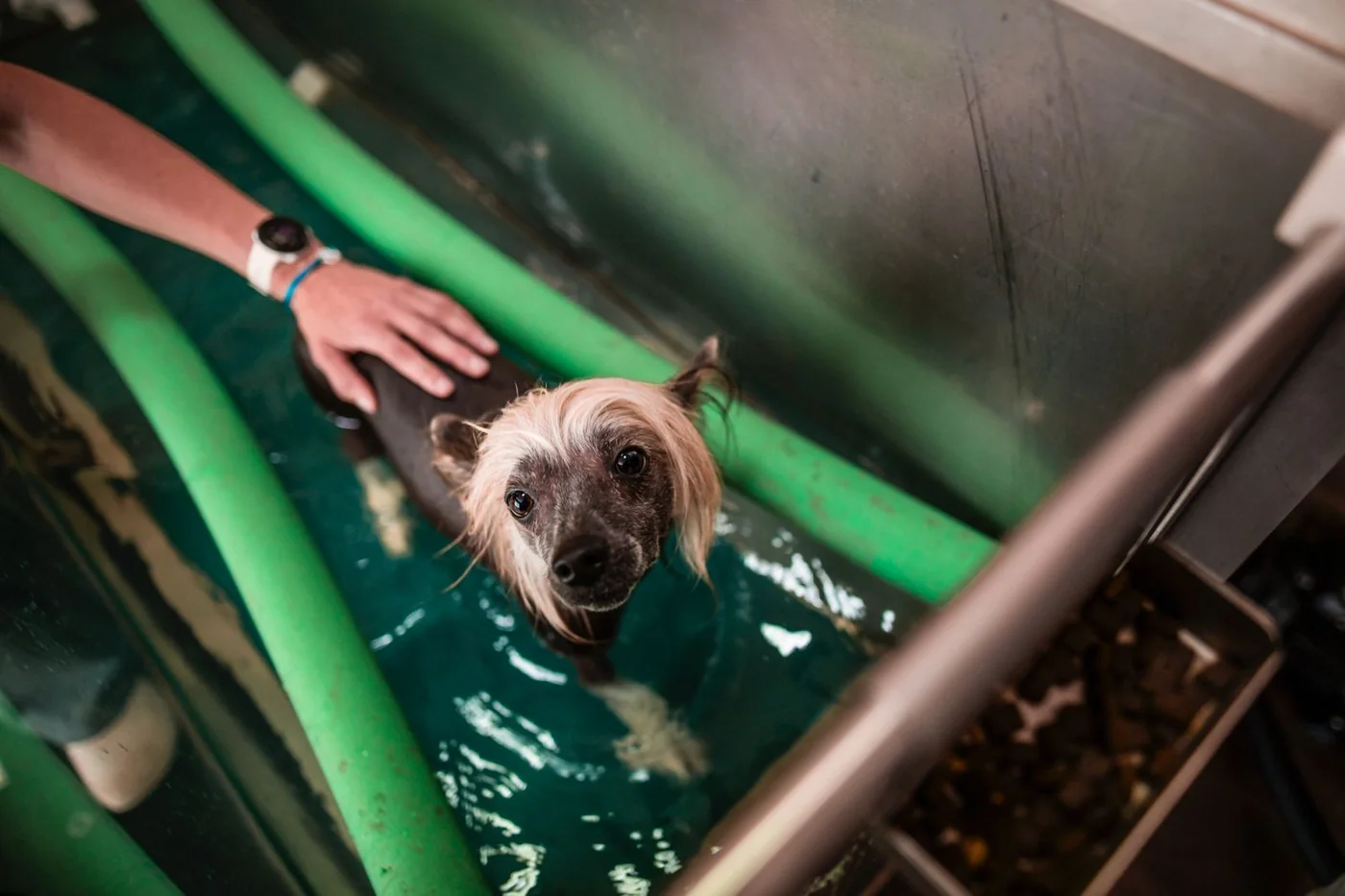
If the dog uses the limb when walking but struggles to place the paw or needs support at a joint, a well-chosen brace can help with each step. We choose its design based on how the dog uses the leg.
With marked weakness or paralysis of the hind legs, a wheelchair can support the rear of the body. Depending on how much support the dog needs and how well it can bear weight on its front legs, we assess the right design.
If your dog suddenly cannot stand up or walk, or the weakness in its legs is getting worse quickly, contact your veterinarian or an emergency veterinary clinic immediately. We choose a device only once the examination results are known.
These signs can have various causes. If you notice them, arrange an examination with your veterinarian.
Do you already have a veterinary report? Send it to us with a short description of the problems and, if your dog is allowed to walk, a short video of their normal walk. We will give you a free initial assessment of whether a device is suitable.
Check if a device suits my dogSee how we fit a custom brace on a dog that needs support for its limb.
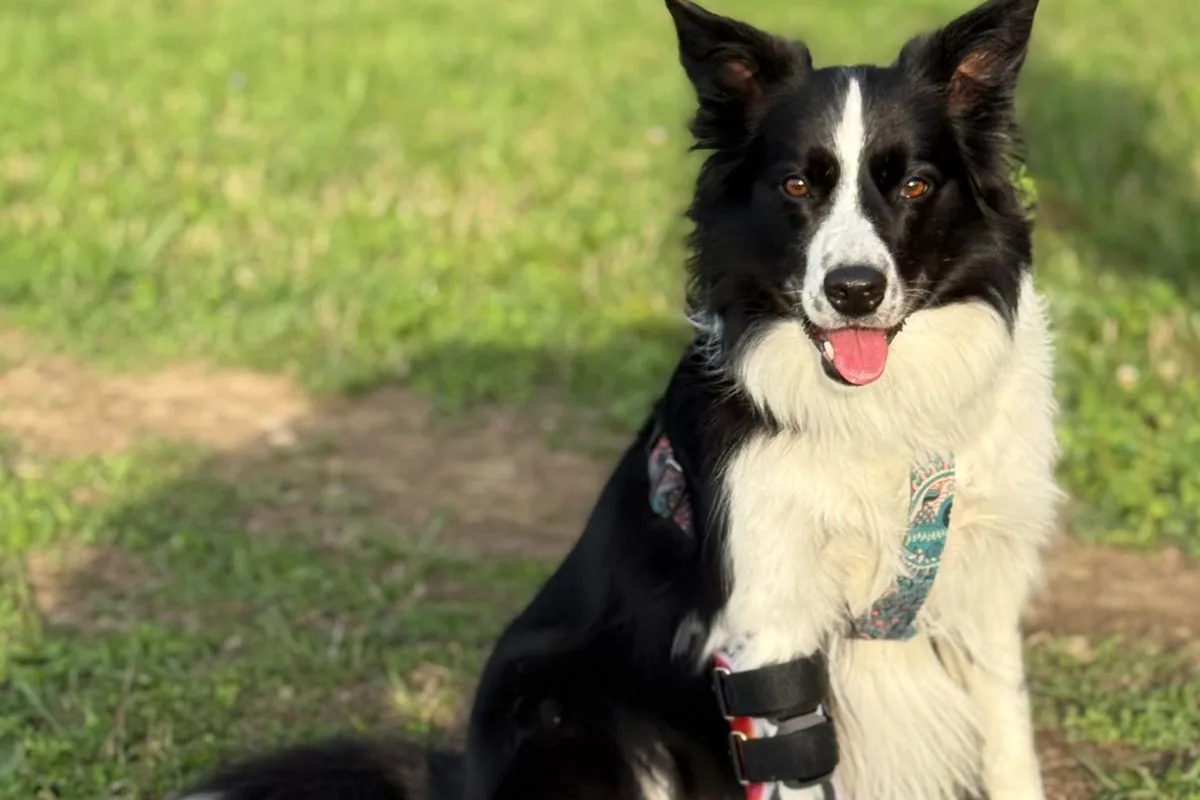 Carpal orthosis (wrist)Support for the carpal (wrist) joint of the front leg in hyperextension and instability.from €700
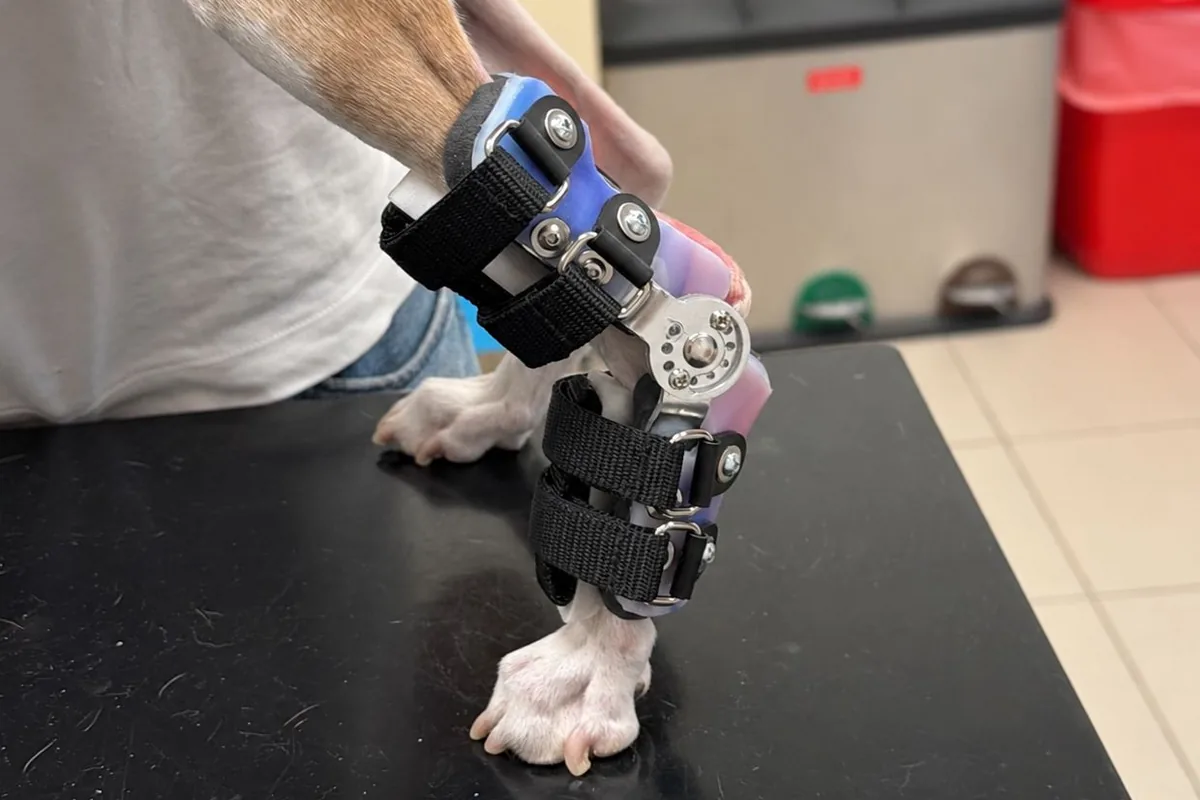 Tarsal orthosis (hock)Support for the hock of the hind leg in hyperextension and instability.from €700
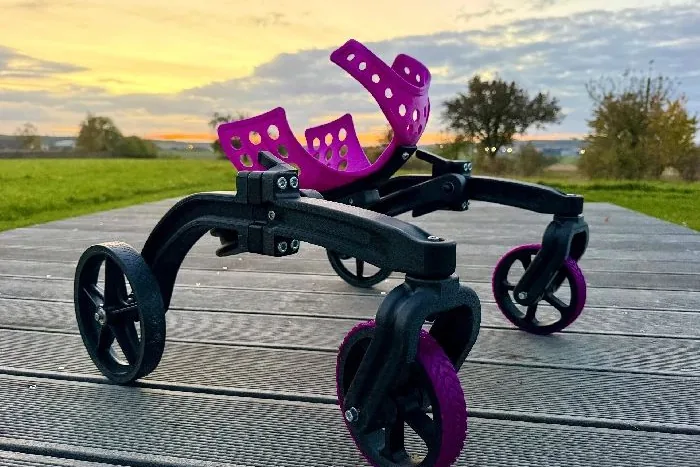 Custom 3D wheelchairsMobility support for dogs with weak, paralyzed or missing limbs.from €1,100
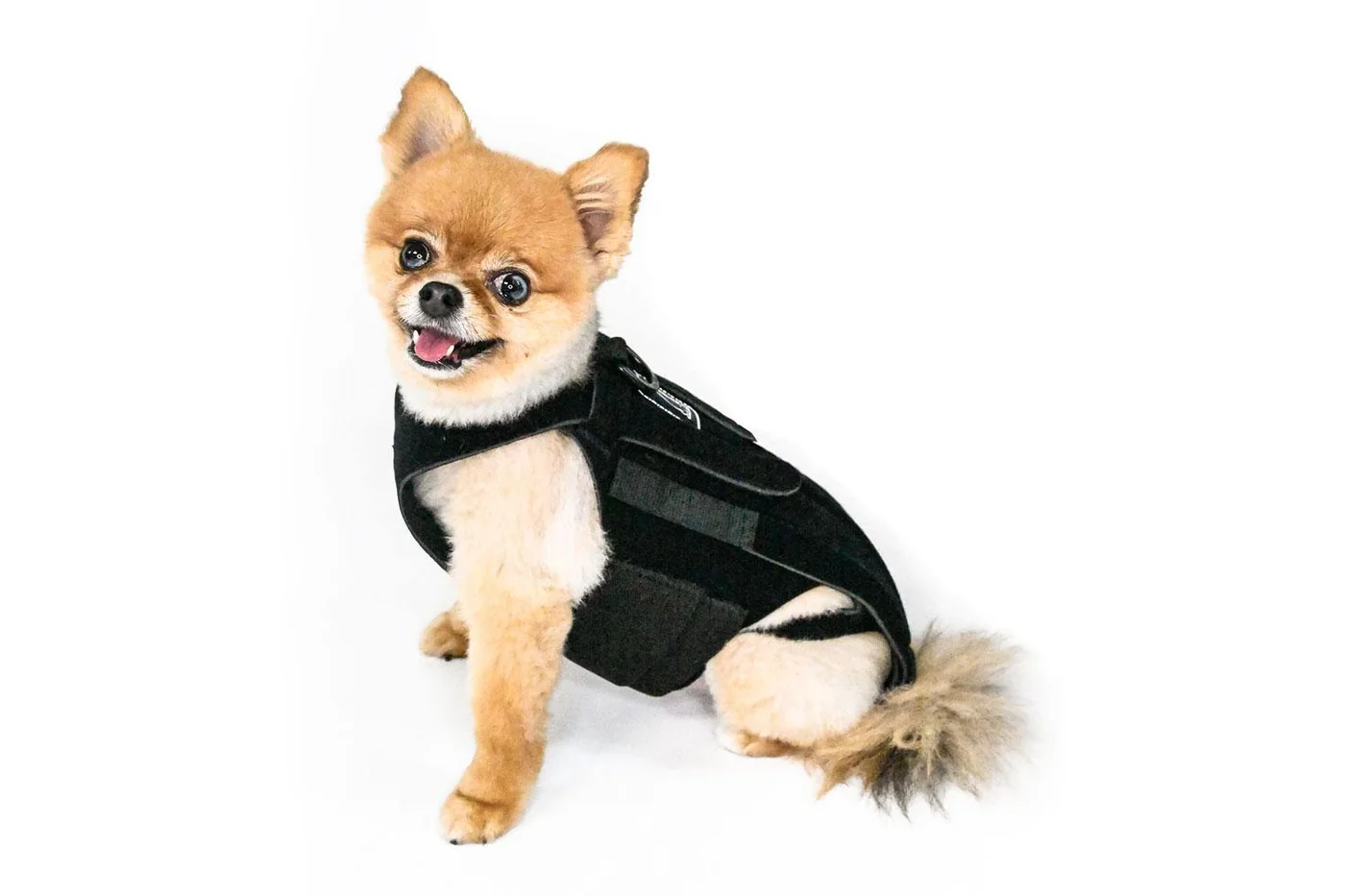 L'il Back Bracer Back Brace for DogsBack support for intervertebral disc problems and chronic pain.from €108
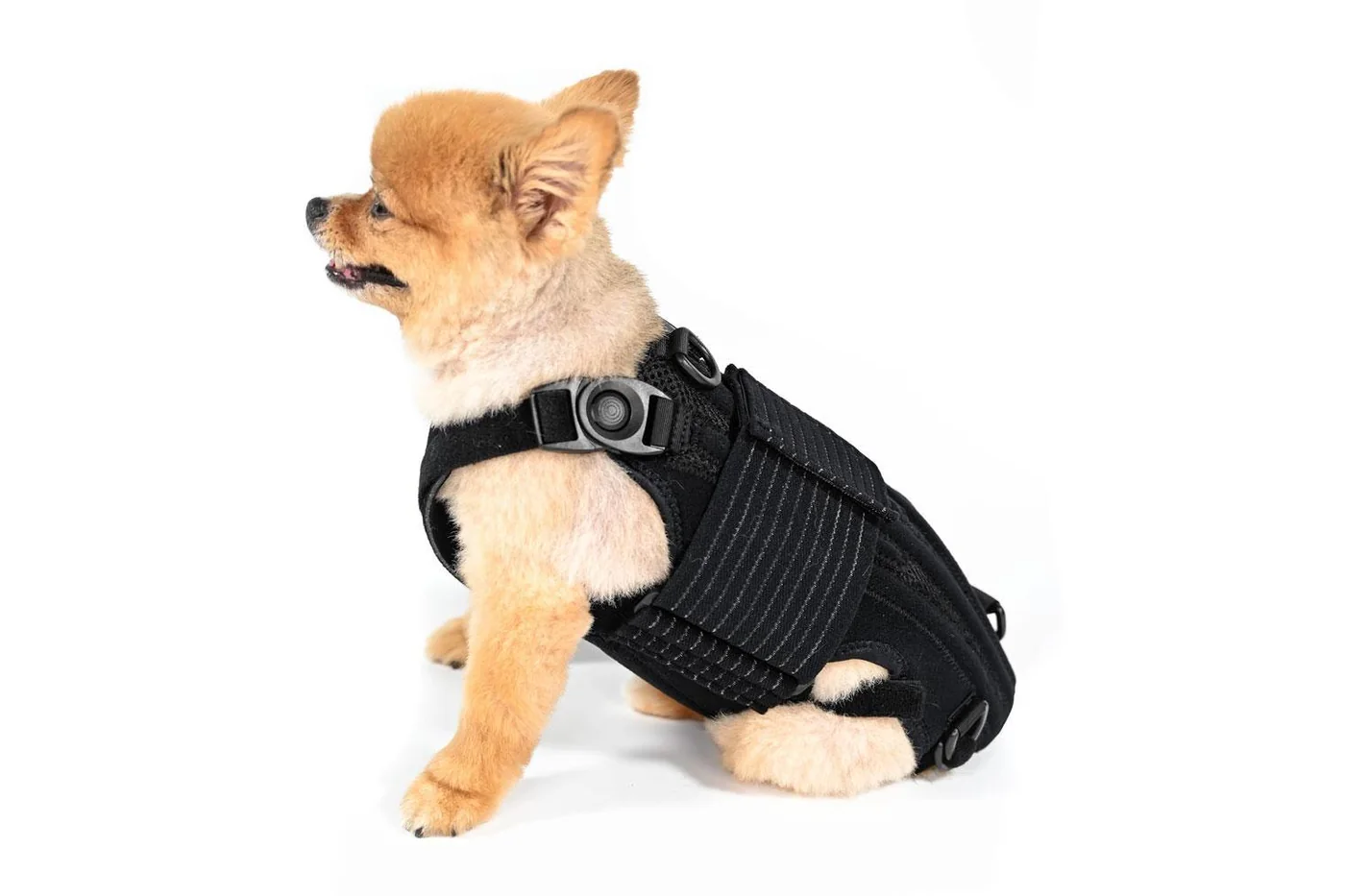 Haute L'il Back Bracer Back Brace for DogsAdjustable back support with pockets for warming packs.from €126
Typical signs are poor coordination, stumbling and reduced awareness of the paws. Only a neurological examination by a veterinarian can confirm it.
Not always. In some cases it is unsuitable and could do the dog more harm than good, especially when it has no control over the movement of its limbs.
We will tell you plainly and recommend another approach or a further specialist examination.
Send us photos and a short video of your dog walking. We will assess the case free of charge and tell you honestly which device makes sense for your dog.