
Veterinary Prosthetics for Dogs
Custom-designed prosthetic limbs that restore weight-bearing function, balance, and long-term mobility in dogs after limb loss.
Veterinary prosthetics are medical devices designed to replace a missing part of a limb in dogs affected by amputation, congenital limb absence, or severe trauma.
When properly designed and fitted, a prosthetic limb can significantly improve gait symmetry, posture, and overall musculoskeletal health.

When Is a Prosthetic Limb Indicated?
Veterinary prosthetic solutions are commonly indicated in the following situations:
limb amputation (front or hind limb)
partial limb loss
congenital absence of a limb segment
traumatic limb injury where reconstruction is not possible
cases where long-term three-legged mobility would lead to secondary orthopedic problems
Each case requires careful assessment to determine whether prosthetic use is clinically appropriate.
Not all amputation levels are suitable for a conventional socket prosthesis due to biomechanical constraints.

Clinical Goals of a Prosthetic Device
A well-designed veterinary prosthesis aims to:
restore weight-bearing capacity
improve balance and postural stability
reduce overload on remaining limbs
minimize secondary joint and spinal strain
support long-term functional mobility
Prosthetics are not cosmetic devices — they are functional medical solutions.

Custom Prosthetic Design — Not a Generic Product
Each prosthetic limb is individually developed based on:
anatomical structure of the residual limb
soft tissue condition and skin tolerance
gait and movement analysis
body weight and activity level
long-term functional goals
No standardized templates are used.
Each prosthesis is a case-specific biomechanical solution.

Our Prosthetic Development Process
Medical and Movement Assessment
Review of veterinary diagnosis, photos, videos, and gait analysisResidual Limb Evaluation
Assessment of limb shape, load tolerance, and soft tissue conditionCustom Design and Manufacturing
Individual CAD-based design using medical-grade materialsFitting and Functional Optimization
Adjustment for comfort, balance, and correct load distributionFollow-Up and Long-Term Adjustments
Ongoing support as movement patterns, healing, or growth change
Prosthetics vs. Orthoses

Prosthetics
- Replace missing limb segment
- Used after amputation
- Restore weight-bearing
- Long-term mobility restoration
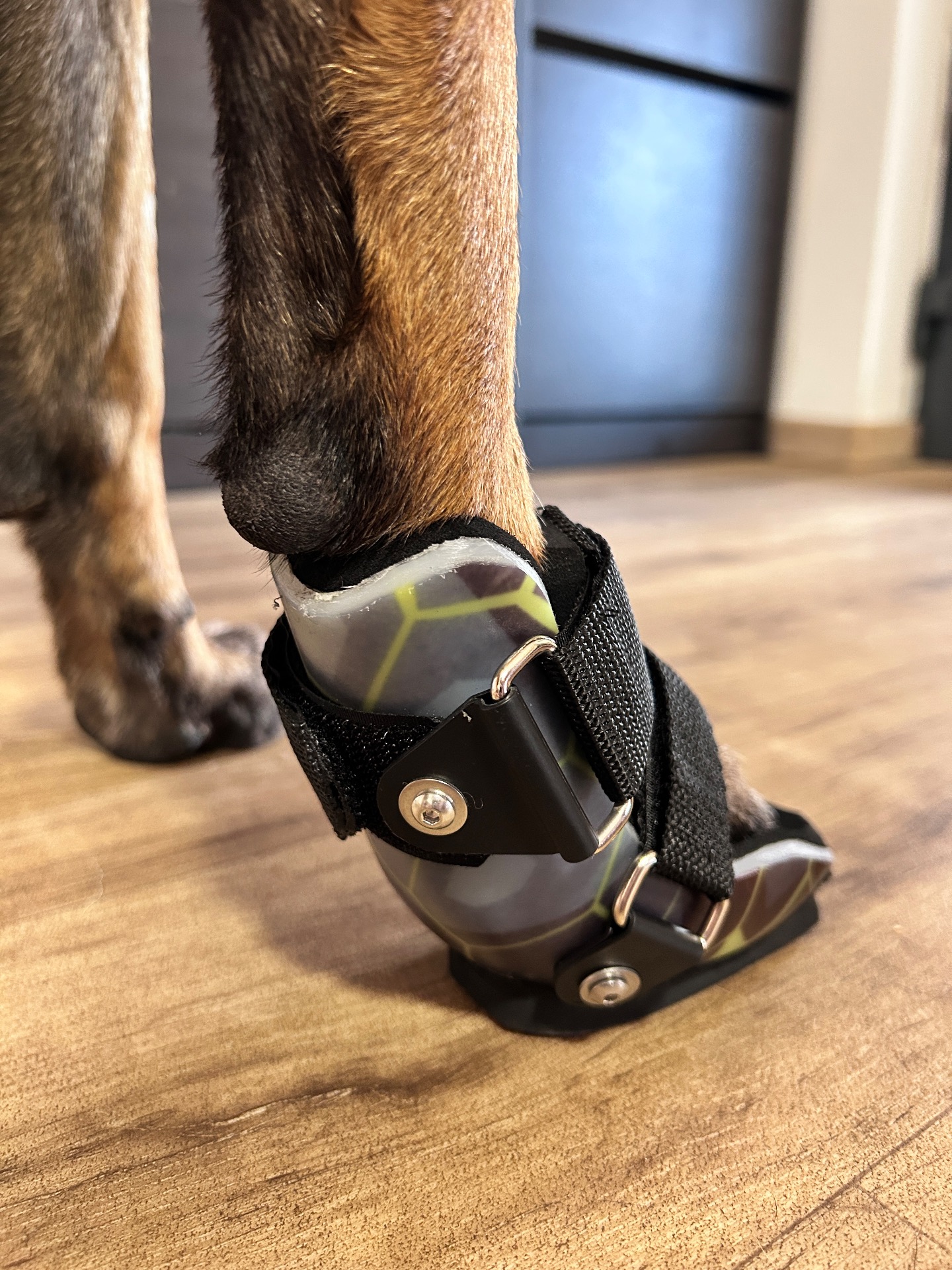
Orthoses
- Support existing limb
- Used when limb is preserved
- Stabilize or guide movement
- Rehabilitation or preventive support
If limb preservation is possible, orthotic support may be more appropriate.

Who Can Benefit from a Prosthetic Limb?
Pet owners
dogs after limb amputation
congenital limb absence
long-term mobility challenges
Veterinary professionals
post-amputation rehabilitation
orthopedic case management
long-term mobility planning
Types of Veterinary Prosthetic Devices


Discuss Whether a Prosthetic Limb Is the Right Solution
Request a Professional Consultation.
Please describe your situation in detail in the message. Additionally, provide information about the animal (species, breed, weight, age), and if possible, also include a photo of the animal.