

Veterinary Prosthetics and Orthoses for Dogs
Custom mobility devices designed to restore function, stability, and long-term musculoskeletal health in dogs with limb impairments.
Mobility impairment in dogs can result from injury, surgery, neurological conditions, or congenital limb abnormalities.
Veterinary prosthetic and orthotic devices provide targeted biomechanical support, enabling safer movement, improved gait mechanics, and reduced secondary strain on joints and the spine.Enter your text here...

Prosthetic Devices (Prosthetics)
Veterinary prosthetics are designed to replace a missing part of a limb and restore weight-bearing function.
They are typically indicated after amputation or in cases of partial limb absence.
Common indications
Limb amputation (front or hind limb)
Partial limb loss
Congenital absence of a limb segment
Traumatic limb injury where reconstruction is not possible
Clinical goals
restore symmetrical weight distribution
improve balance and posture
reduce overload of remaining limbs
support long-term mobility

Orthotic Devices (Orthoses)
Veterinary orthoses are designed to support, stabilize, or limit movement of an existing limb or joint.
They are used when limb preservation is possible but requires biomechanical assistance.
Common indications
Joint instability (e.g. ligament injuries)
Neurological conditions affecting limb control
Post-operative stabilization
Chronic orthopedic conditions
Preventive joint protection
Clinical goals
joint stabilization
controlled range of motion
improved limb alignment
pain reduction and functional support
Prosthetics vs. Orthoses: What Is the Difference?

Prosthetics
- Replace missing limb segment
- Used after amputation
- Restore weight bearing
- Long-term mobility restoration
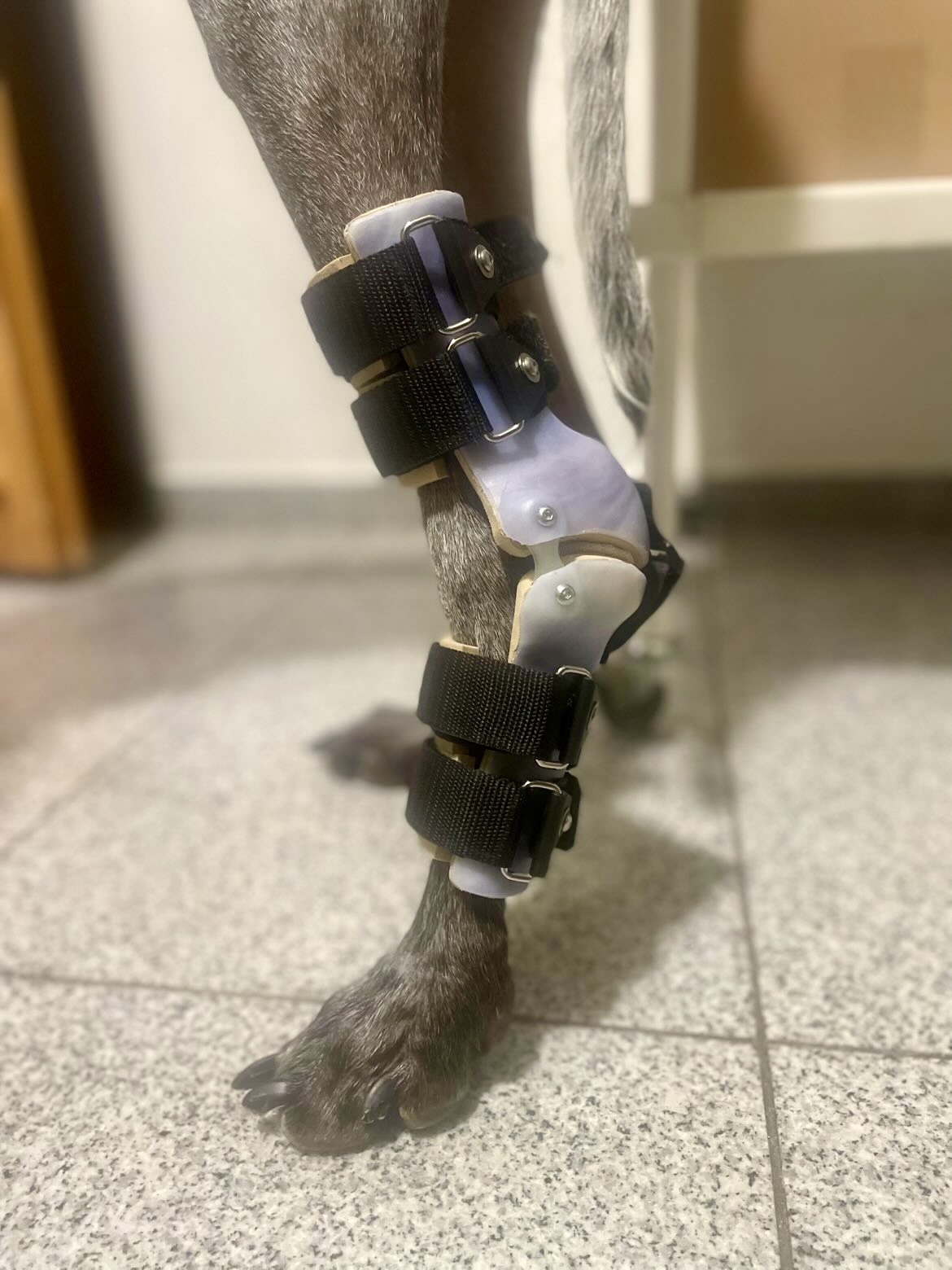
Orthoses
- Support existing limb
- Used when limb is preserved
- Stabilize or guide movement
- Rehabilitation or preventive support
This distinction is essential for selecting the appropriate clinical solution.
Device Selection Based on Clinical Assessment
Each mobility device is selected based on:
anatomical structure
type and location of impairment
gait and movement analysis
veterinary diagnosis
activity level and lifestyle
There is no universal solution — proper device selection is critical for long-term success.

Our Clinical Development Process
Medical and movement assessment
Device selection (prosthetic or orthotic)
Custom design and manufacturing
Fitting and functional optimization
Follow-up adjustments and long-term care

Who These Devices Are Designed For
Pet owners
dogs with mobility impairment
post-surgical recovery
long-term orthopedic conditions
Veterinary professionals
orthopedic and neurological cases
rehabilitation planning
long-term mobility management

Explore Mobility Solutions by Condition
Dogs after limb amputation
Partial limb loss
Joint instability and ligament injuries
Neurological mobility disorders
Growing dogs with limb deformities

Discuss the Right Mobility Solution for Your Dog
Request a Professional Consultation