

Tarsal (Hock) Orthosis for Dogs
Custom-designed veterinary orthotic devices to stabilize the canine tarsal joint and support controlled, functional movement of the hind limb.
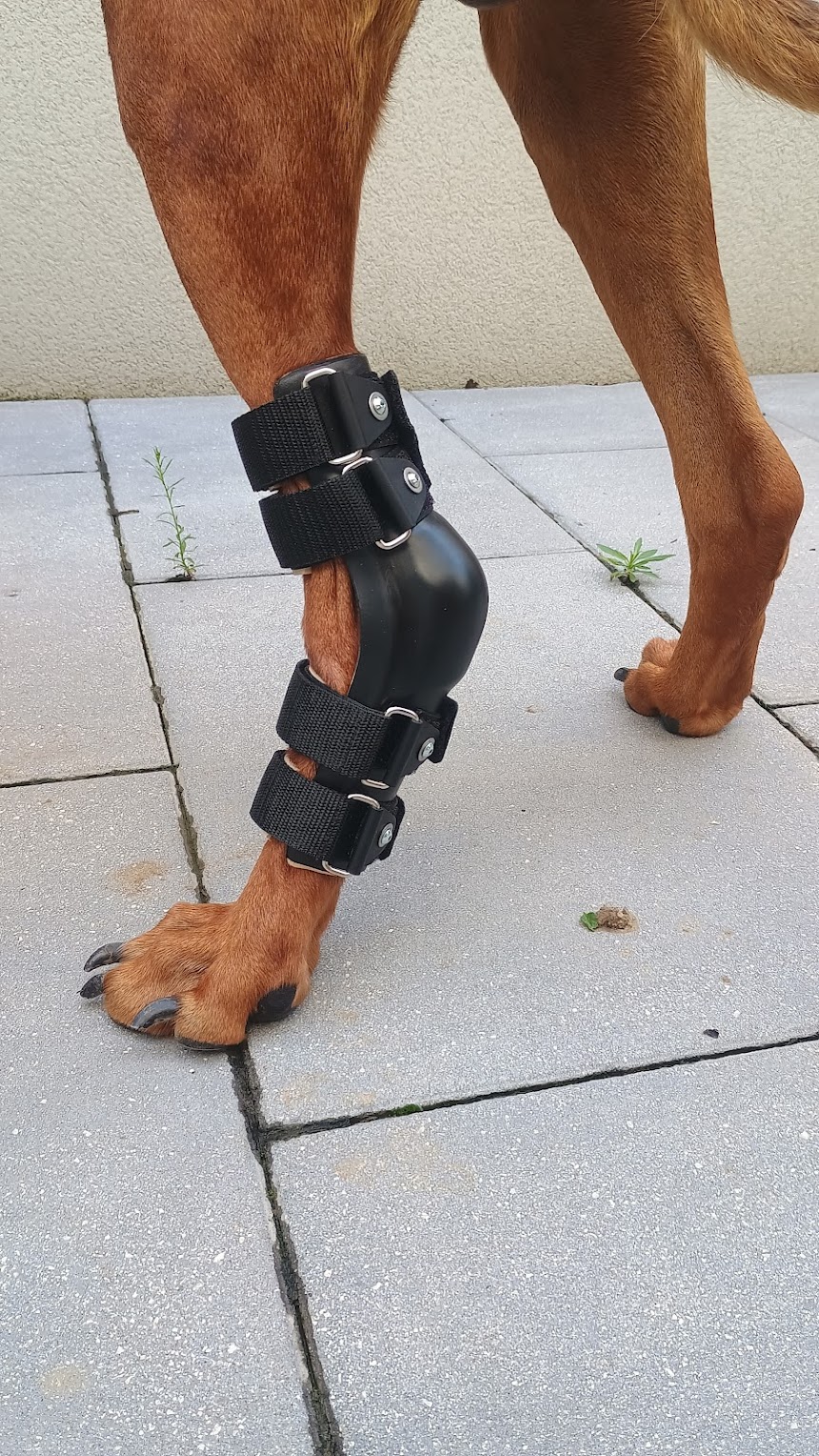
Tarsal orthoses are veterinary medical devices designed to support and stabilize the canine hock (tarsal) joint in cases of injury, instability, or neurological dysfunction.
When appropriately designed and fitted, a tarsal brace can help improve limb alignment, support weight-bearing, and reduce abnormal loading during stance and gait.

Clinical Indications for a Tarsal Orthosis
A tarsal orthosis may be considered in the following situations:
tarsal joint instability or hyperextension
Achilles tendon (common calcaneal tendon) injury
post-traumatic or post-operative hock instability
neurological conditions affecting hind limb control
degenerative conditions requiring joint stabilization
support during rehabilitation and controlled return to activity
Each case requires individual veterinary assessment to determine suitability.
Functions of the Tarsal (Hock) Orthosis
The tarsal orthosis is designed to provide targeted stabilization of the canine hock joint and to limit excessive or unwanted movement that may compromise joint integrity or delay recovery. By supporting controlled motion, the orthosis assists functional limb use while helping to manage acute injury or chronic instability.
As with our other orthotic devices, the tarsal brace is manufactured from lightweight yet durable thermoplastic materials. This ensures effective support while minimizing additional load on the limb and maintaining comfort during daily activity and rehabilitation.
Tarsal injuries may result from acute traumatic events or from repetitive stress that places excessive strain on the supporting structures of the joint, including the common calcaneal (Achilles) tendon. In these cases, appropriate joint stabilization is essential to prevent further tissue overload.
Our tarsal orthoses are designed to support the distal tibia and limit excessive plantarflexion or hyperextension of the hock joint, thereby reducing abnormal loading of the Achilles tendon. When clinically indicated, the orthosis can be equipped with an adjustable strap system that allows controlled range of motion, supporting functional movement while restricting harmful joint excursion.
By limiting excessive motion and supporting proper alignment, a tarsal orthosis can help reduce the risk of re-injury and contribute to improved joint stabilization and tissue recovery as part of a comprehensive treatment or rehabilitation plan.
In selected cases, tarsal orthoses may also be suitable for feline patients. Suitability for use in cats must be assessed individually, taking into account the animal's health status, anatomy, and specific clinical needs. Professional consultation is required prior to application.
Who Is a Tarsal (Hock) Orthosis Intended For?
A tarsal orthosis may be considered for dogs requiring stabilization and controlled support of the hock joint in a variety of clinical situations, including:
Support following Achilles tendon injury
Orthotic stabilization of the tarsal joint may be used during recovery from injury to the common calcaneal (Achilles) tendon to support controlled movement and reduce excessive strain on healing structures.Post-operative support after tarsal arthrodesis
Following surgical procedures such as arthrodesis, a tarsal orthosis may assist in stabilizing the joint and supporting controlled limb use during the recovery period.Support after medial or lateral collateral ligament injury
In cases of collateral ligament damage, orthotic support may help improve joint stability and protect healing soft tissues.Support following digital flexor tendon injuries
A tarsal brace can assist in managing flexor tendon injuries by providing joint support and controlled range of motion.Management of tarsal hyperextension or instability
Orthotic stabilization may help limit excessive hyperextension and reduce abnormal joint motion associated with instability.Assistance with neurological deficits affecting paw placement
In dogs with neurological conditions resulting in abnormal paw positioning or involuntary digital flexion or extension, a tarsal orthosis may be adjusted to help support controlled limb placement during stance and gait.Support in cases of failed or incomplete arthrodesis
When surgical stabilization does not achieve the expected outcome, a tarsal orthosis may help provide additional joint support and reduce discomfort, allowing continued functional movement.
Each case is individually assessed to determine whether a tarsal orthotic solution is clinically appropriate and aligned with the dog's condition, functional needs, and overall treatment plan.
Pricelist
The price depends on the size of the animal (the prices are final, including the cast kit, including transport in Europe).
Orthosis with bend (semi-rigid):
< 0 - 15 kg
800 EUR
Orthosis with bend (semi-rigid):
15 - 35 kg
875 EUR
Orthosis with bend (semi-rigid):
< 35 kg and more
900 EUR
Additional parts for extra charge:
Top cover / wrist pocket / other custom modifications
85 EUR
Orthosis without bending (rigid):
< 0 - 15 kg
700 EUR
Orthosis without bending (rigid):
15 - 35 kg
800 EUR
Orthosis without bending (rigid):
< 35 kg and more
875 EUR
Additional parts for extra charge:
Top cover / wrist pocket / other custom modifications
85 EUR

Clinical Goals of a Hock Brace
A properly designed tarsal orthosis aims to:
stabilize the hock joint
limit excessive plantarflexion or abnormal motion
support functional weight-bearing of the hind limb
improve limb alignment during stance and gait
reduce compensatory overload of other joints and limbs
support safe, controlled movement
Orthotic support is intended to stabilize and guide motion, not to replace the limb.

Why Tarsal Orthoses Require Specialist Expertise
The canine tarsus is a complex joint that plays a key role in propulsion, balance, and shock absorption during movement.
Effective orthotic stabilization requires:
precise alignment of the joint axis
controlled limitation of abnormal motion
careful pressure distribution over soft tissues
preservation of functional muscle activity
Poorly fitted or generic braces may compromise gait mechanics or increase discomfort, highlighting the importance of custom orthotic design.

Custom Tarsal Orthosis — Designed Case by Case
Each tarsal brace is individually developed based on:
veterinary diagnosis and clinical objectives
limb geometry and joint alignment
gait and functional assessment
body weight and activity level
rehabilitation and long-term mobility goals
No standardized designs are used.
Each orthosis is created as a case-specific biomechanical solution.

Our Orthotic Development Process
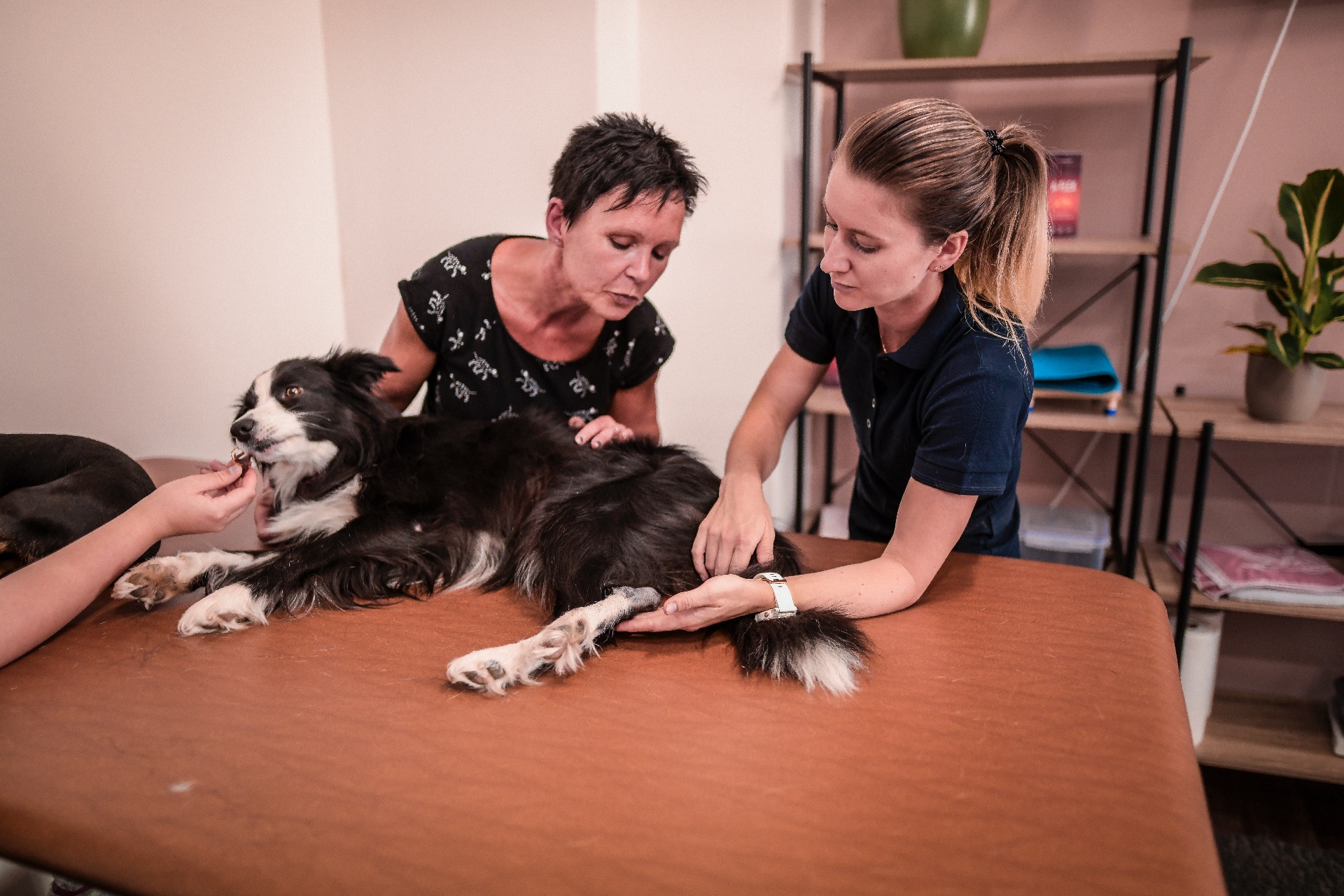
Veterinary Case Review
Diagnosis, imaging, and functional evaluationLimb Measurement & Biomechanical Analysis
Alignment, range of motion, and load assessmentCustom Design & Fabrication
CAD-based planning using medical-grade materialsFitting & Functional Testing
Comfort, stability, and controlled movement assessmentFollow-Up & Adjustments
Monitoring adaptation and optimizing long-term outcomes
Tarsal Orthosis vs. Other Treatment Options
Option
Tarsal orthosis
Surgical intervention
Conservative management
Prosthetic solutions
Purpose
Stabilizes the hock and controls joint motion
Structural repair when indicated
Rest, medication, rehabilitation
Not indicated for joint instability
Orthotic support may be used as a primary or complementary treatment, depending on clinical indication.

Who Can Benefit from a Tarsal Orthosis?
Pet owners
dogs with hock instability or tendon injury
dogs requiring post-injury or post-surgical support
dogs with neurological hind limb deficits
Veterinary professionals
orthopedic and neurological case management
rehabilitation planning
long-term hind limb stabilization strategies

Discuss Whether a Tarsal Orthosis Is the Right Solution
Please describe your situation. Additionally, provide information about the animal (species, breed, weight, age), and if possible, also include a photo of the animal.